
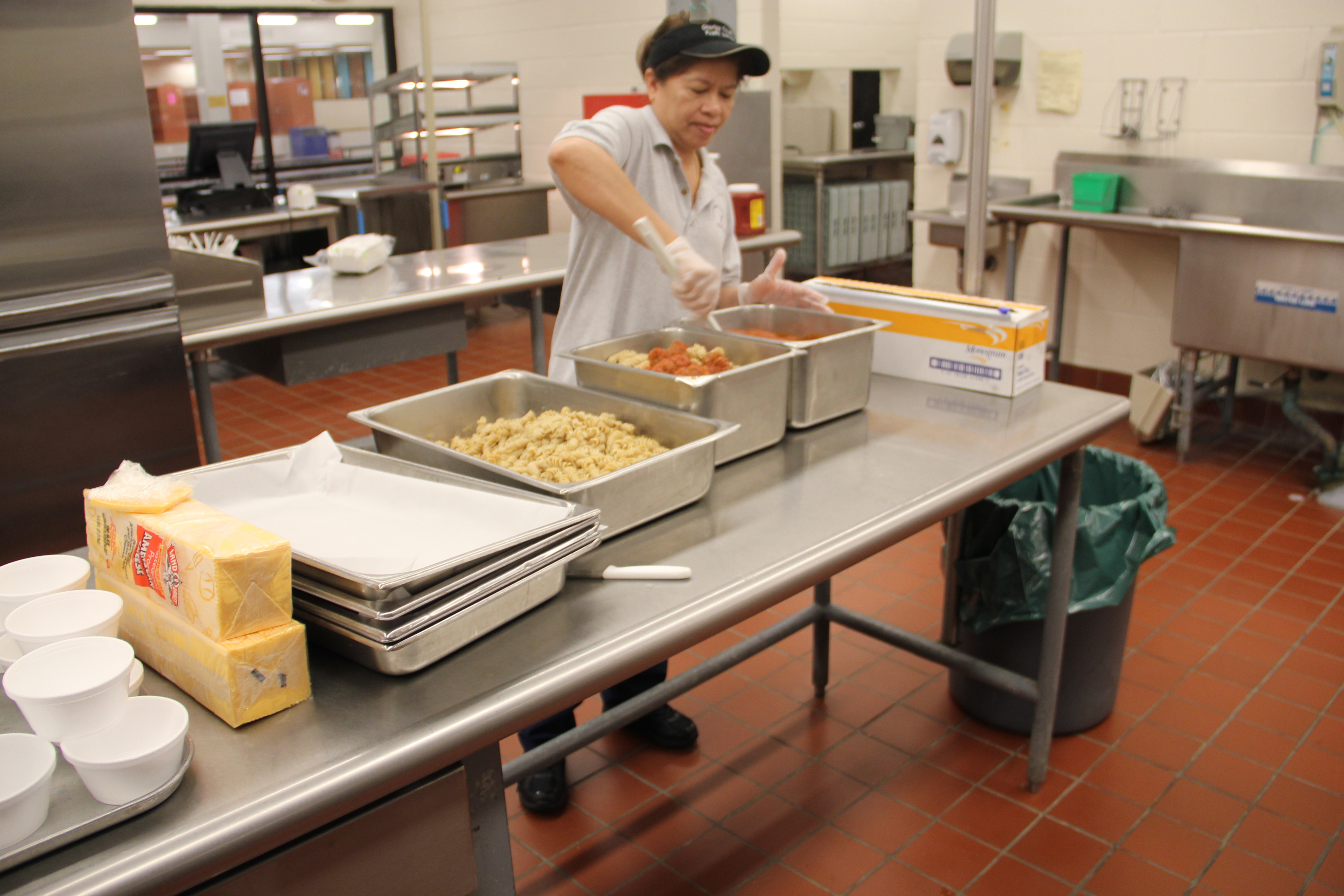
La Plata High School’s cafeteria food poses as a useful resource for nutrition for those who are either unable to pack lunch or just want or need to eat. Due to the new changes to the National School Lunch Program, schools across the country are required to give out healthier lunches, which they do, but still some students and staff are less than satisfied.
Many at La Plata feel they are uninformed as to where the food comes from and that ingredients are unknown to the students, which creates the question “What are we eating?” Knowing this, the salads, sandwiches, and wraps may have an expiration date, but never a made date, and those who eat the salads, sandwiches and wraps are exposed to soggy wheat products and old lettuce.
There are also inconsistencies with both the food and the new requirements for school lunches. Despite the best efforts of the cafeteria workers, many of the food items served to us is often unpredictable in quality and taste. Even after achieving the CCPS Breakfast Hall of Fame, vast improvements for school lunches are needed.
“A lot of the food looks like prepackaged, dry stuff,” junior Sam Ward said. She also felt that the food tastes like “astronaut food,” in reference to the texture feeling dehydrated and rehydrated several times. When asked how she would like to have the food improved, she, like several other students, would like more of a healthy selection, especially fresh fruit.
“I’d rather take the time out of getting ready [for school] to pack a lunch … instead of just buying a lunch,” junior Kai Hyser stated. “It’s never a, ‘man, I want that!’ but an, ‘I guess I’ll have that.’”
But to shed some light on the subject, the cafeteria does warrant a healthy selection of assorted fruits, vegetables and wheat products, giving those gluten-free and vegan options to satisfy their mandatory needs, but the higher question reigns as to, if it is not appealing, why waste the school money in purchasing items the students and faculty will not eat?
Most understand that the problem is certainly not the cafeteria workers or methods of cooking, but the quality of products they are required to use. La Plata history teacher Chris Butler said, “[We] have to recognize that this is not Burger King or Chick-Fil-A … and also recognize that the cafeteria workers are feeding around 800 people in a span of three hours … but in order to get better food, we are going to have to get more money.”
How to receive more money for healthier lunches is currently a point of contention. A restructured budget or increased food prices may be necessary.
We may not know how to seek improvements, but all around us customers do feel uninformed, even when information can be free. So, if anything, information is key, and most students overall would like to know what they are eating.





No Comments